Most In-Demand Programming Languages 2025

As technology accelerates into 2025, employers are hunting for developers who can build AI systems, scalable cloud services, fast web apps, and secure low-level infrastructure. The phrase "most in-demand programming languages 2025" reflects a mix of established staples (like Python and JavaScript) and rising stars (like Rust and Go). Whether you’re switching careers, upskilling, or mapping out your next project, understanding which languages lead the job market and why will help you make smarter choices.
Why these languages are dominating demand in 2025
The job market in 2025 is shaped by several forces: AI and machine learning, cloud-native architecture, web and mobile experience, cybersecurity, and performance-driven systems (edge computing, IoT, blockchain). Languages that interoperate with AI frameworks, scale well in distributed environments, or offer safety and performance are prioritized. For example, Python remains essential for data science and AI thanks to libraries like TensorFlow and PyTorch, while JavaScript and TypeScript power the modern web and full-stack stacks (Next.js, Node.js). Rust gains traction where memory safety and high performance are critical — cloud providers and WebAssembly projects increasingly prefer it. Go is the go-to for microservices and cloud tooling because of its simplicity, concurrency model, and fast compile times. Employers also value JVM languages (Java, Kotlin) and C# for enterprise systems and mobile apps. Understanding these trends helps explain not just which languages employers list, but why they pay premiums for developers skilled in them.
Top programming languages to learn in 2025 (and when to pick them)
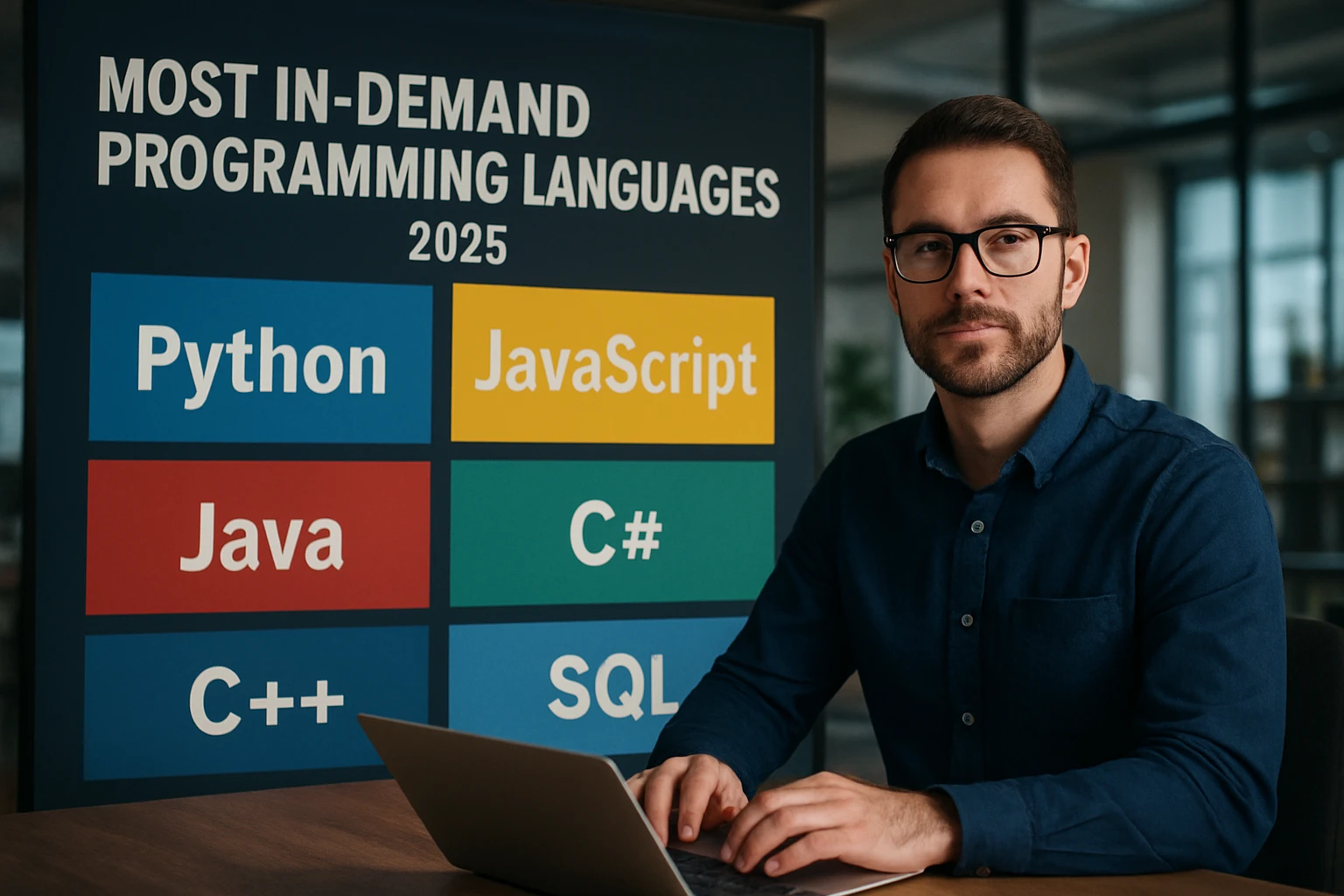
1. Python — Best for AI/ML, data engineering, prototyping. Python still tops demand due to its vast ecosystem and beginner-friendly syntax. Learn it if you want careers in machine learning, data science, or automation. 2. JavaScript & TypeScript — Best for web and full‑stack development. JavaScript remains ubiquitous; TypeScript adds type safety and is increasingly required in larger teams. Choose these for front-end frameworks (React, Vue) and back-end Node.js roles. 3. Rust — Best for systems, performance-critical apps, and blockchain. Rust’s memory safety and growing tooling make it ideal for secure, high-performance applications. Pick Rust if you target systems engineering, embedded work, or WebAssembly. 4. Go — Best for cloud-native services and DevOps tools. Go’s concurrency model and deployment simplicity make it a favorite for microservices, Kubernetes tooling, and observability stacks. 5. Java & Kotlin — Best for enterprise apps and Android. Java remains central to large enterprise systems; Kotlin increasingly dominates Android development and interoperates with Java ecosystems. 6. C# — Best for enterprise, game development (Unity), and cross-platform apps. With .NET evolution and Blazor, C# remains relevant across back-end and client scenarios. 7. Swift — Best for iOS/macOS apps. Swift is the standard for Apple platforms and important if you’re focused on native mobile development. 8. SQL & specialized languages (R, Julia) — Best for analytics and scientific computing. SQL is indispensable for data roles; R and Julia keep niche value in statistics and numerical research. How to choose: match language strengths to industry demand. If you want AI/data roles, prioritize Python and SQL. For cloud infrastructure, learn Go and Rust. For frontend/mobile, pick JavaScript/TypeScript, Kotlin, or Swift. Employers often value adjacent skills (cloud platforms, containerization, CI/CD) as much as language proficiency.
How to move from learning to hired: practical steps for 2025
Learning a language is just the start — hiring managers look for projects, tooling knowledge, and problem-solving. Follow these steps: 1) Build 2–3 portfolio projects that showcase the language’s strengths (an ML model for Python, a scalable API in Go, a performant module in Rust). 2) Contribute to open-source or create reproducible demos with tests and CI to show engineering discipline. 3) Learn the ecosystem: frameworks, package managers, deployment tools (Docker, Kubernetes, serverless), and relevant cloud services. 4) Master fundamentals: algorithms, data structures, and system design — these transfer across languages and are often the focus of interviews. 5) Network and target job descriptions: tailor your resume and GitHub to the stacks employers list. Finally, keep learning: languages and frameworks will shift, but the ability to pick up new tools quickly is a top in-demand skill in 2025.
Conclusion
In 2025, the most in-demand programming languages reflect where tech is headed: AI and data (Python), web and full-stack (JavaScript/TypeScript), cloud and infrastructure (Go, Rust), and platform-specific apps (Kotlin, Swift, C#). Choose the languages that align with your career goals, build real projects, and demonstrate system-level understanding. Ready to boost your career? Start by picking one primary language from this list, create a focused portfolio project, and explore job postings to match the exact skills employers want — then iterate. Want a personalized learning plan or suggested starter projects based on your background? Reach out or comment and I’ll help you map the next steps.
Hire Smarter, Post Your Job for Free on JobTower
Finding the right tech talent shouldn’t be complicated. Whether you’re a startup searching for your first developer or a global company scaling your IT team, JobTower.io helps you connect with skilled professionals who are actively looking for their next opportunity.
Post your job for free today and get instant visibility across our growing job network, social channels, and Google Jobs listings. Our platform is optimized to attract high-quality candidates, saving you time while ensuring your opening reaches the right audience.
👉 Post a Job Now
Join Our Newsletter or Find Your Next Role
Don’t miss out on the latest job opportunities in the tech world. Subscribe to the JobTower Newsletter and get fresh openings, career advice, and hiring insights delivered straight to your inbox.
If you’re ready to take the next step in your career, browse hundreds of open positions on our Jobs page from remote freelance roles to full-time tech positions across the globe. Be the first to discover new opportunities, stay informed about market trends, and grow your career with JobTower.
.svg)
%2C%20Color%3DOriginal.svg)



Follow Jobtower on your favorite platform - we share new job opportunities the moment they go live.